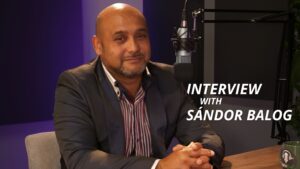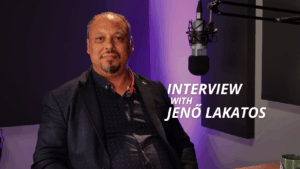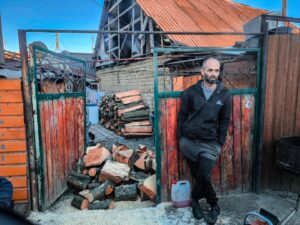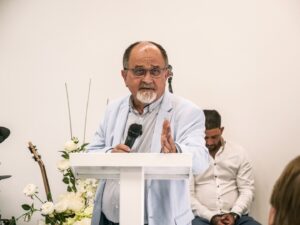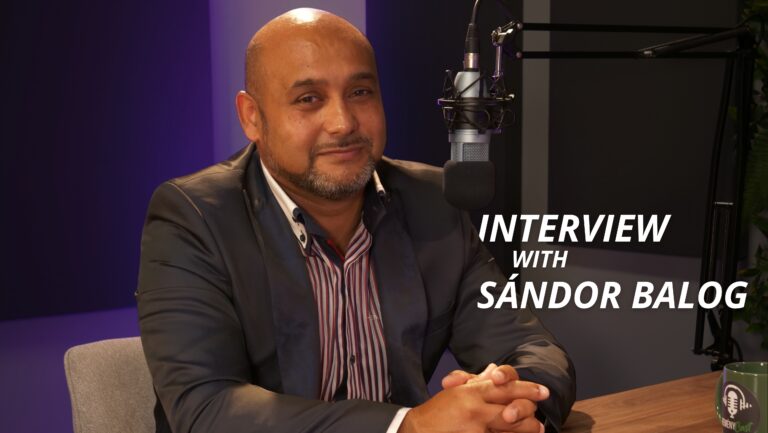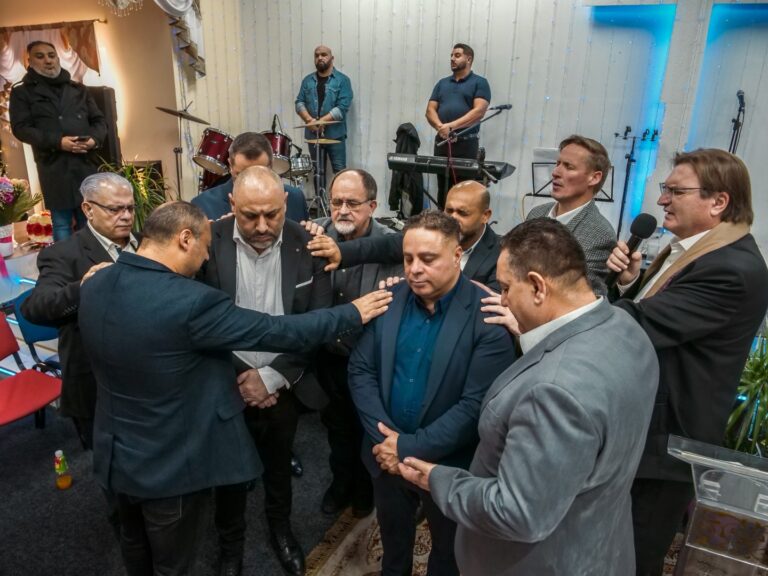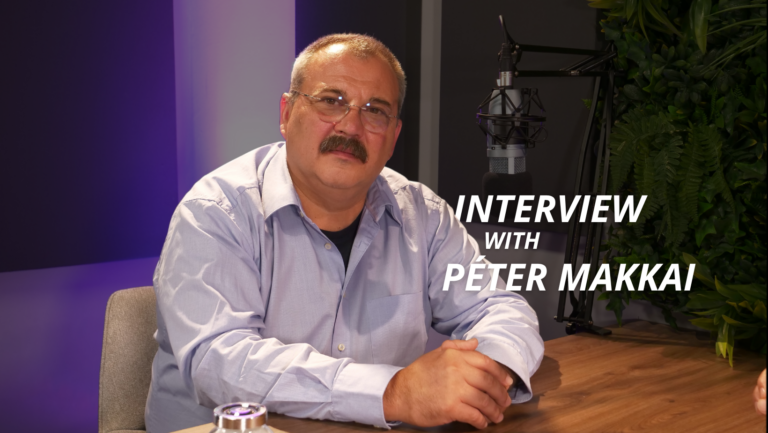

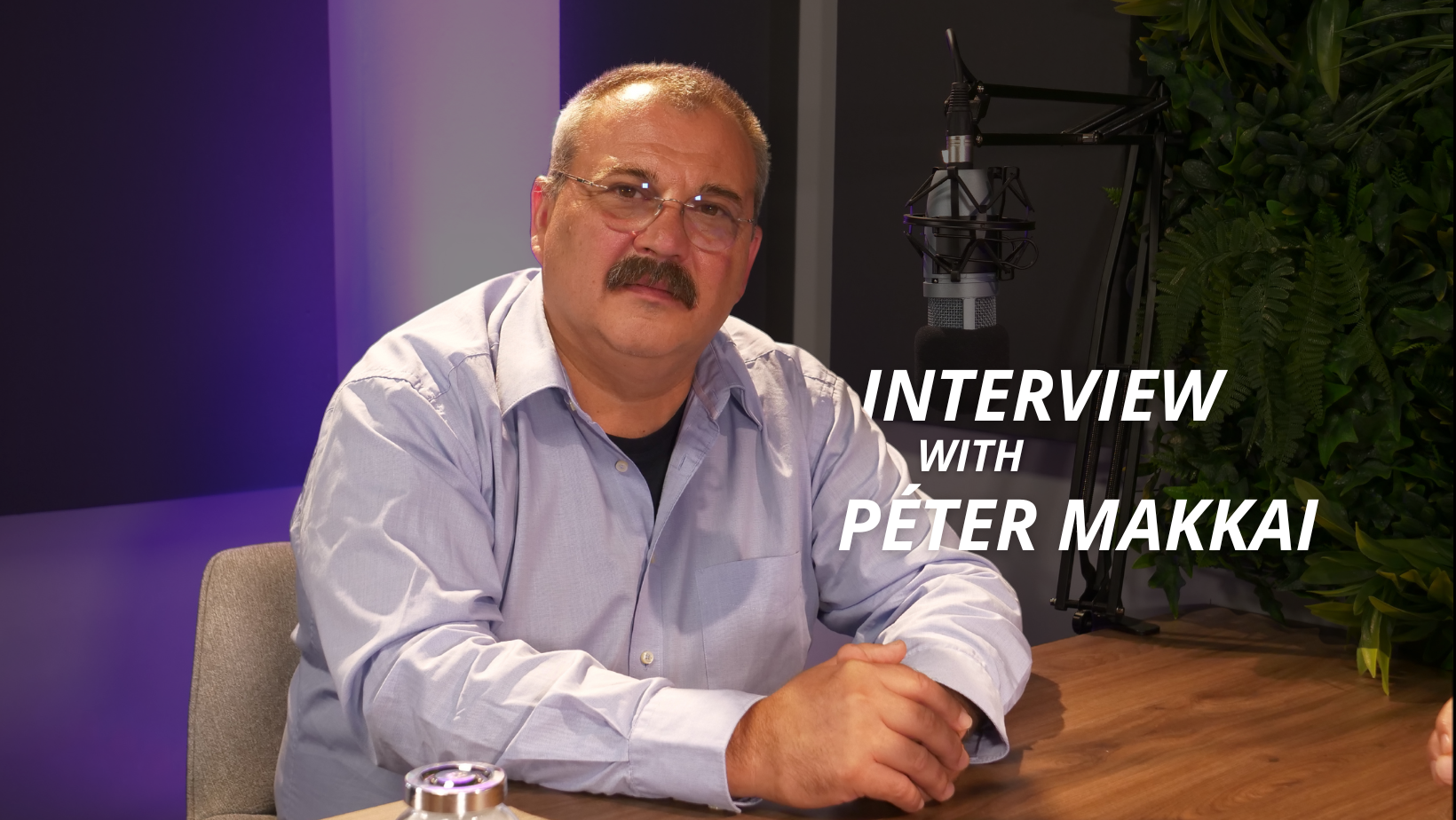
As a Reformed pastor, former State Secretary for Social Affairs in Romania, and head of the Transylvanian Reformed Roma Mission, he has a comprehensive perspective on the situation of Roma communities in Transylvania and internationally. He is convinced that the social inclusion of Roma people is not a privilege or positive discrimination, but a matter of historical justice. During this conversation, we touch on several important and sensitive topics.
You have joined us as the leader of the Transylvanian Reformed Roma Mission. Where does this work stand today, and what are its main goals?
Although the title sounds impressive, in reality we are still at the very beginning. The organization is small for now, and many times I am both “general and foot soldier” at the same time. At the same time, we believe that God has already prepared this path for us, and we are moving forward on it with confidence.
Great strength comes from occasions when we meet with other Roma missions, pray and worship together. This strengthens our community in faith as well. In Transylvania there is an enormous spiritual hunger: when we announce an evangelistic event in a village, people often gather in astonishing numbers, even if the event is announced only shortly beforehand. For us, this is clear feedback: there is great openness, and God’s Spirit is going before us in this ministry.
Where is the center of the Roma mission located?
If I am honest, for now I myself am the center. Our base is in Sepsiszentgyörgy, at the Diakonia Foundation, where I work. Our office operates there, and my colleagues also coordinate their tasks from this location. At the same time, we are not thinking only in terms of one city: we aim to travel across all of Transylvania, mapping the field, building relationships, and starting work wherever we see real opportunity.
Are you specifically creating Roma congregations, or what exactly does the mission do?
The goal is twofold. On the one hand, we support pastors and church communities where Roma communities live, helping them connect with these communities in an authentic and effective way. On the other hand, we are also working to establish a few model Roma congregations that can serve as good examples and inspire similar initiatives elsewhere.
You began your journey as a Reformed pastor. Was this clear to you from childhood?
It was not a completely straightforward path. Although my grandfather was a Reformed pastor, and the possibility was there, I did not consciously prepare for this vocation as a child. I was more interested in the humanities: history, folk art, cultural education, and even philosophy. Eventually, in my final year of school, the decision matured within me to move toward theology and pastoral ministry, and that was when I began preparing for it intentionally.
Your grandfather had a remarkable life path. You mentioned that during the communist period, choosing the pastoral vocation was a conscious decision for him. What motivated that choice?
The question was not whether it was easier, but whether the boundaries were clearer. He was the cultural secretary of Szolnok-Doboka County, worked as an ethnographer, and essentially directed the county’s cultural life. After the communist takeover, however, he saw that within the Church it was possible to serve the nation and Christianity more clearly and without compromise. As a pastor, it was clear to him that he stood in the service of the Word, without having to make political or ideological concessions.
Many church leaders and pastors suffered persecution at that time. Wasn’t this an especially difficult fate?
Yes, it was extremely difficult. At the same time, it was very clear who stood on which side. The Church was in a quasi-oppositional position, and those who chose this path did not have to constantly protect their livelihood through compromises. Even under oppression, the role of the Church was clear: one could serve, not bargain. If the state intervened, there was a price to pay, but no compromises had to be made. This clarity was decisive.
Were church communities allowed to exist at all? Could people practice their faith?
The Church was under heavy pressure. Every area where it could have opened toward society—schools, hospitals, social institutions—was taken away. It was essentially pushed back within the walls of the church building. At the same time, the church still provided a kind of protection. The congregation was a community of trust: anyone who attended church at that time clearly declared that they belonged to the Christian community.
You were very young during the revolution, yet you actively participated. How did you experience that period?
I was 18–19 years old, just before my final exams, full of enthusiasm. I experienced the revolution literally before my own eyes. I grew up in Cluj-Napoca, and right in front of our house the army stopped demonstrators marching toward the city center. That night, gunfire echoed continuously; in the morning, we collected the wounded and the dead. I was there when we tried to help a man who had been shot—unfortunately, he later bled to death.
The next day, after Ceaușescu fled, an overwhelming euphoria took hold of everyone. Everyone wanted to do something. As members of a church youth community, we helped receive, guard, and distribute aid shipments—throughout the night, either at the church or at the sports hall, where hundreds of trucks arrived. We were given various tasks, large and small; it was natural for us to be there.
We also participated in student assemblies and emerging forums: meetings around the RMDSZ and the student union, often held in private homes. I don’t even know how information reached us—there were hardly any phones—but we went wherever we could. During those days, night and day blended together. There was no fear in us. There was joy, liberation, and an immense desire to act. We felt that the gates had truly opened.
Throughout your ministry and later political career, helping the elderly, the vulnerable, and people with disabilities has been central. Where did this calling come from, beyond simple human compassion?
It always happened on the basis of calling. As a student, I began working with social issues through the Christian Youth Association. Already in 1990, after the regime change, many people were forced onto the streets from various institutions, including people with disabilities, and fellow believers tried to care for them. At the congregational level, we organized aid distributions: in the mornings, we gave hot tea and bread with lard to those in need; in winter, 30–40 people would gather in the church. This was completely natural for us.
This mindset continued after I moved to Székelyföld, where I began organizing relief work and diaconal services in Covasna County. In the villages, people lived in very difficult conditions, and in many places there was no one to give an injection or dress a wound. We tried to help wherever we could.
Later, in Sfântu Gheorghe, we launched a small daytime center for people with disabilities, operating from 8 a.m. to noon. This later grew into the Írisz Houses, which today are well-known, independent institutions.
The children’s program developed in a similar way. We saw that many marginalized children—those from single-parent or Roma families—had no real opportunities. We started the first afternoon education program with seven children; today, 600–700 children participate each year, not only in the city but also in surrounding villages. We help them catch up academically, assist with homework, and provide a warm lunch—because in Romania, children go home after noon, and no one takes care of them. This program gives them a real chance for development and integration.
There was a major turning point in your life when you became a state secretary. How did you become involved in politics?
In reality, I was always connected to politics. When someone does something for the community—whether as a pastor, youth leader, or someone who influences others’ lives even for a single day—that is already politics. Even a cup of hot tea and a slice of bread can shape lives.
When the RMDSZ, representing the Hungarian minority, entered government, a broader perspective was needed—not only on minority rights, but also on economic, financial, and social issues. That was when they approached me to participate in this work. Although I had not been an active politician before, I felt a calling to represent social policy and initiate change.
The results confirmed this calling: with God’s help, we were able to implement measures that benefited society as a whole.
As a Christian podcast, the question often arises: how should we relate to politics? Was it clear to you that active participation was necessary?
Yes. Based on Scripture, God’s called servants have always been political actors as well, whether they planned to be or not. Think of Daniel, Joseph, or Gideon—they did not set out to play political roles, yet God worked through them for the good of the community. I believe Christians have a responsibility toward society, and if they assume a position, they must seek God’s guidance in their decisions.
I always openly embraced my Christian identity: in meetings, conferences, and speeches, I grounded my positions in faith and Scripture. It is important to see that Western welfare states are built on Christian foundations—the concept of social structures was born within Protestant churches. In the 21st century, however, these foundations are often removed, and decisions are no longer built on solid ground.
For example, in the case of migration: in Calvin’s Geneva, Huguenot refugees were not simply given aid—they were given work. They rebuilt city walls and drainage systems, integrating while creating value. Today, the opposite approach is often chosen: pure aid without integration, which does not solve the problem because the foundational principle—social contribution—is missing.
That is why I always brought political decisions before God in prayer, asking for His guidance, so that we could implement measures that truly served the community.
Were your ideas about integrated services in small communities accepted?
Not only accepted, but integrated. The problem was that education, social care, and healthcare interventions ran in parallel, so communities could not truly be lifted up. Just as in the Gospel of Mark, where four friends bring the paralyzed man to Jesus, small communities also need coordinated educational, social, and healthcare support.
I began reaching out to ministries to launch integrated programs. This was difficult, because rivalry was common within the system—some villages received multiple projects, others none. Thus emerged the concept of a single center providing education, social assistance, and healthcare simultaneously.
This philosophical shift is spreading slowly. Teachers, assistants, nurses, and social workers are adapting to it. Today, in diaconal and mission work, we think holistically: you cannot bring only the Word into a community—you must also provide food, services, childcare, and elderly care. A hungry person cannot truly hear the Word.
When your position as state secretary ended, did you return to church work?
It was not automatic; this too was based on calling. After long prayer and many conversations, I decided to take on the Reformed Church’s Roma mission and continue serving social issues along this path. I owe much to Albert Durkó, who connected us and supported my decision as the mission’s leader.
The story of the Parajd salt mine is symbolic: the value of salt in society reminds us that Christians must be present as the “salt” of the community, highlighting what is good and contributing flavor and substance to society.
The Transylvanian Reformed Church, under decades of minority and communist pressure, preserved its faith in a concentrated form. As a result, when Western theological influences arrived, the Church stood on solid ground. This is why, on the issue of gender, the Transylvanian Reformed Church was the only one to take a firm public stand—later followed by other Hungarian churches.
This approach shows clearly that faith and service for the community go hand in hand and have a lasting impact on society.
What is the current situation of Roma communities in Transylvania?
The Roma population in Transylvania is estimated at 120,000–150,000, and more than 60% live in segregated areas, mainly in rural villages. A much larger proportion of Hungarian-speaking Roma live in segregation compared to Romanian-speaking Roma. In many places, infrastructure is missing: there are no roads, gas, sewage systems, or drinking water, and electricity supply is extremely limited. In some segregated areas, 40–80 people have no access to potable water; in urban segregations, 800–1,000 people rely on a single well.
Most people in these communities are not waiting for aid, but for opportunity. If given a real chance, they can move forward: many are willing to work, even abroad, for three to four months at a time. Experience shows that these people are hardworking, disciplined, and maintain hygiene when genuine opportunities are provided.
The problem is not a lack of diligence, but a vicious cycle: from minimum wage, large portions are deducted for taxes or fines, while families must support six children. Local employment often does not provide a viable livelihood, making it extremely difficult to escape poverty. Long-term, complex solutions are needed.
While serving as state secretary, you employed a colleague with Down syndrome. Could you tell us how she joined your team and what her role was?
It was important to me that the cabinet relate sensitively to people with disabilities, so I specifically looked for a colleague with a disability. A young woman with Down syndrome applied from Bucharest and worked with us for six hours a day. She took photographs, wrote posts, welcomed guests, and participated in field visits with the cabinet. She was a full-fledged colleague; this was not symbolic work.
Her presence also influenced decision-making. “A minister decides very differently when a colleague with a disability is sitting across from him,” she once said. This illustrated my conviction that every political decision must benefit those we represent—whether people with disabilities, Roma communities, or other marginalized groups.
We are grateful to our guest for his valuable insights and experiences. May God’s blessing accompany his ministry and daily life.