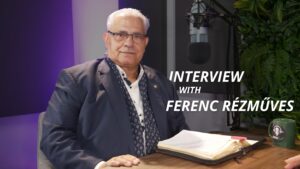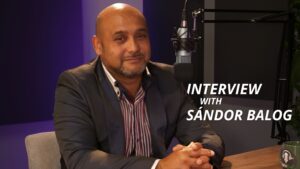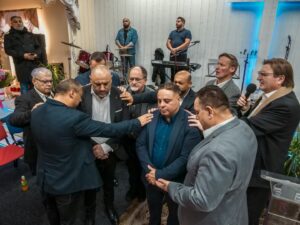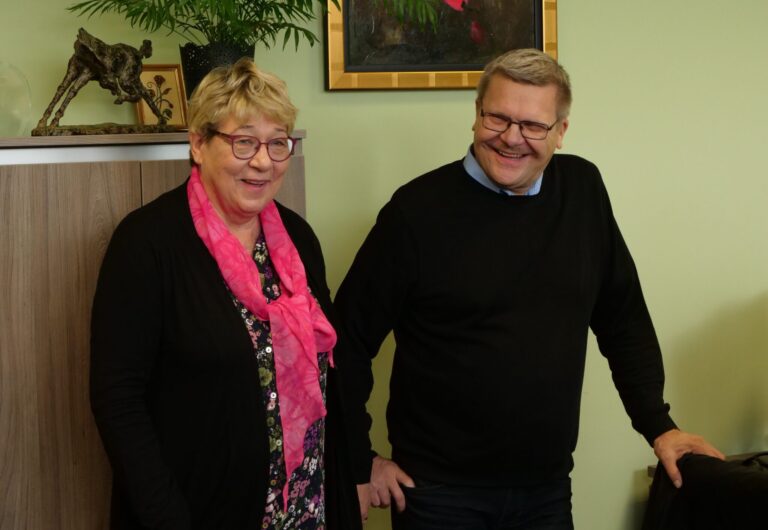

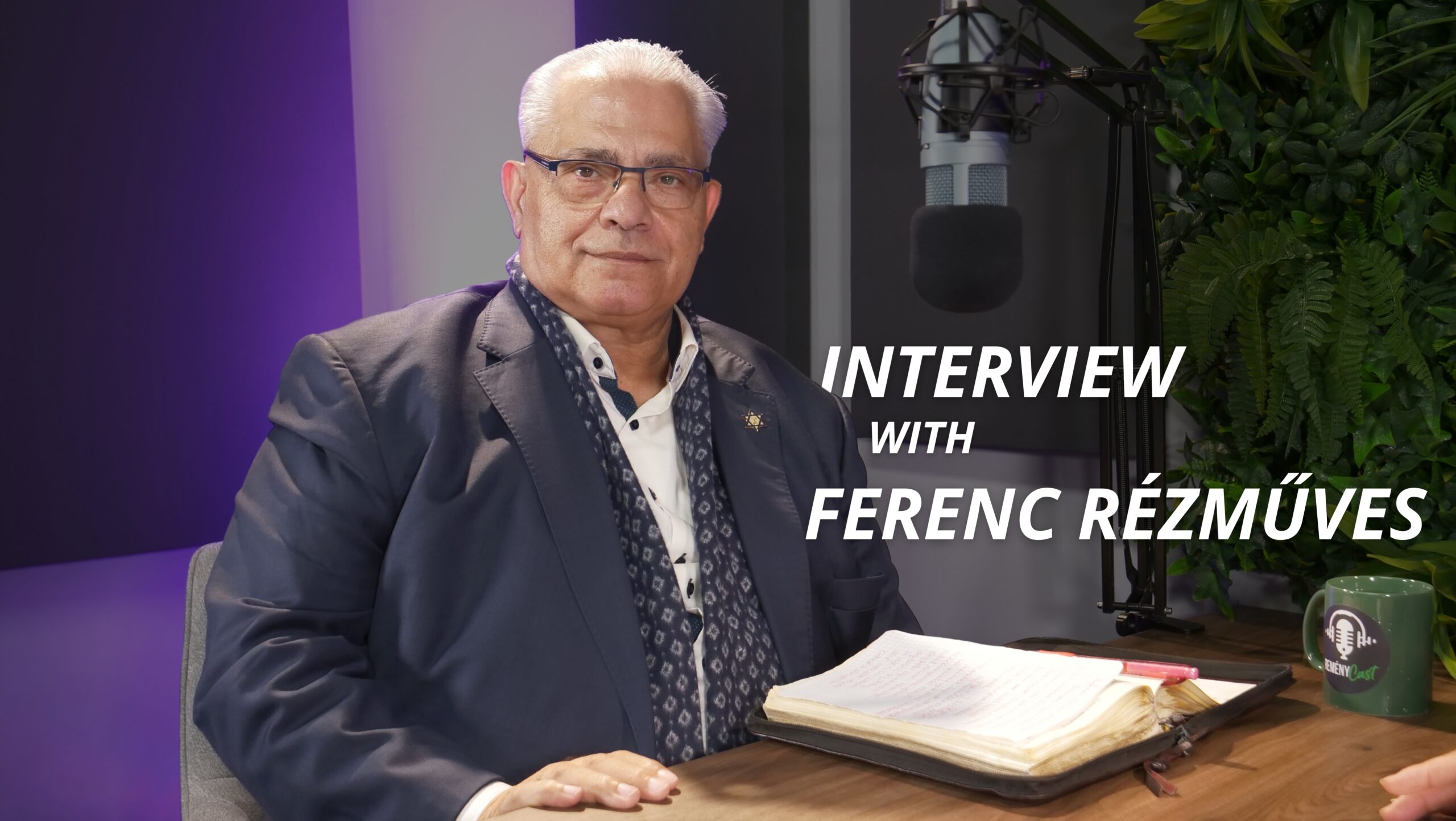
There are people whose life stories read more like novels than reality. Our guest today, Ferenc Rézműves, pastor and executive elder of the Hungarian Gypsy Missions International (HGMI), often says that the years before his conversion were marked by chaos, poor choices, and deep pain. Yet for decades since, he has served faithfully in HGMI, bringing healing and hope to wounded hearts and souls. In this episode, he speaks with honesty, depth, and remarkable openness about the turning points in his life, his struggles, and the renewal that transformed him.
A warm welcome to you here in the studio. Where have you come from, and where do you currently live?
I currently live in Kántorjánosi, which is my permanent home. From there, I regularly travel to surrounding towns and villages, including Kótaj, where I serve in various congregations. The journey to the studio here in Békés takes about two and a half hours.
What was your life like before your conversion?
I grew up in very difficult circumstances. My father left our family early, and my mother raised all six of us alone. By the age of nine, I was already smoking, and as a young boy, I worked simply to earn enough for food and cigarettes.
I married at sixteen, and around that same time, my struggle with alcohol began. Drinking gradually took control of my life until I became fully dependent on it. My addiction placed an enormous burden on my family, and I caused deep pain to my wife and loved ones. Physically, alcohol destroyed me, I suffered constant trembling and serious health problems.
Looking back on that season is painful, but I believe it is important to share where God brought me from.
Were you ever involved in crime or violence?
I was never involved in serious crime, but I was aggressive and confrontational. I often looked for conflict and made many destructive choices. I always carried a knife because I believed that was the only way to protect myself, and even minor disagreements could quickly escalate into threats.
Today, I feel deep shame about that chapter of my life, but I am also profoundly grateful that God changed me. Although I caused pain and made many serious mistakes, I was spared even worse consequences.
Was your wife with you even then?
Yes. I am still married to the same woman I married when we were very young. We have been together for nearly fifty years, and I thank God for that every day.
My wife was always more patient and wise than I was. Even during the darkest seasons, she remained by my side. We endured many conflicts and hardships, especially because of my lifestyle at the time, but she never turned against me. Instead, she quietly carried burdens that should never have been hers to bear.
Looking back, I recognize her as one of God’s greatest gifts in my life. Our marriage is a testimony to grace.
How did your conversion happen? How did you encounter God?
My conversion began during one of the darkest periods of my life. My father’s death shook me deeply, and at that time, I was still trying to drown my grief in alcohol.
Although I had heard the gospel before, I paid no attention to it. In fact, I kept my distance from faith and even blamed God for my losses.
The day after the funeral, while our family was gathered together, something unexpected happened. Children began singing a song about Jesus, and for the first time, I felt a sincere desire to know whether God was truly real, and if He was, that He would reveal Himself to me.
What happened next is difficult to explain. I experienced something deeply supernatural, as though God’s presence stood before me and spoke directly to my heart. No person led me to that moment; it was an intensely personal encounter.
Afterward, I went home, lay down, and fell into a deep sleep. When I woke up, something within me had completely changed. I suddenly longed for the Bible, and it felt as though my former addictions—alcohol and cigarettes—had simply vanished. The desire for them was gone.
That was the beginning of a complete transformation, and for more than forty years, my relationship with God has remained the foundation of my life.
How did the people around you react? How did your wife respond to such a dramatic change?
When I woke up, the first thing I asked was whether we had a Bible in the house. My wife was confused. She assumed this was temporary and that life would soon return to the old patterns. She told me we did not have one. But what I felt inside was unlike anything I had ever known. It was not alcohol or cigarettes I was craving, it was something much deeper, as though I were missing life itself. Eventually, someone found an old, worn Bible in the family. The moment I held it, I knew this was different. As I began reading, a passage from Deuteronomy deeply moved me, a passage about God choosing and calling a people. For me, this was not simply reading Scripture. It felt deeply personal, as though God was speaking directly to me and giving my life a new direction.
Did you sense at that moment that God was calling you into ministry?
No, not at all. At that time, I never imagined becoming a pastor or preacher. I simply felt that God had spoken to me through Scripture and that I had somehow been chosen. Only later did I understand that this was the beginning of a long journey that would eventually lead into ministry.
Looking back now, I know this was not because of my own merit, but because of God’s grace. That truth still gives me confidence today—I do not walk this path alone.
How did your ministry begin?
In the beginning, a pastor from Mátészalka, Gusztáv Dicső, became a mentor to me. He walked alongside me for many years and taught me the basics of faith. At that time, I understood neither Scripture nor prayer. I had to learn everything from the beginning.
My ministry began unexpectedly. One day, the pastor was unable to attend a gathering, and his wife encouraged me to say a few words to the people who had assembled. I had no idea what preaching even meant. All I had was a hymnbook, so I read a hymn aloud. As I spoke, people began to cry. That was the first moment I realized that God could use me.
A long season of growth followed. I did not even know how to pray properly, so at night I would go out into the garden and cry out to God in the only way I knew how. Over time, I was shaped through prayer, Scripture, and faithful mentoring. At the beginning of my ministry, not everyone welcomed what was happening.
A Greek Catholic priest reported me because he believed I was causing disturbance. At the police station, I simply shared my story, who I had been, and what God had done in my life. Later, even the man who had opposed me acknowledged the reality of the change and admitted that I had truly become a different person.
In time, I even became a local government representative and developed relationships with people who had once criticized me. Eventually, hostility gave way to conversation and mutual respect.
What did your ministry grow into?
A major turning point came in 1996, when the Pentecostal community sent me to Kántorjánosi. By then, I was already serving in several congregations, and the work began to expand significantly. In many places, we witnessed spiritual renewal, conversions, and stronger communities.
During this time, I had a defining encounter with BrotherAlbert. When he was sent to Kántorjánosi, I immediately felt compelled to stand beside him and support his ministry. That relationship opened a new direction in my own calling. Over the following years, the ministry expanded into multiple towns, and we witnessed many stories of transformation, healing, and renewed faith.
One particularly memorable event took place in Kótaj, involving a seriously ill little girl who had reportedly been declared dead in the hospital. At her mother’s request, we prayed for her, and she recovered. Experiences like this deeply strengthened both the ministry and the faith of the community.
I also faced a major personal trial when I was diagnosed with a malignant tumor. Humanly speaking, there seemed to be little hope, yet I felt no fear. At a later examination, doctors found no trace of the illness, and no treatment was required.
Looking back, I believe ministry is not measured by numbers, but by transformed lives, and I am grateful to have played even a small part in that work.
How do you see the future of the church and your own life?
I believe both the church and this mission have a future and a calling.
Our president, Albert Durkó, carries a vision of reaching 325,000 people. At first, I struggled to understand such a large vision, but over time, I came to believe that it carries genuine purpose and direction from God.
For me, what matters most is faithfulness, that we continue this work together, supporting one another in ministry. I do not see the future as something to face alone, but as something we walk into together, shoulder to shoulder.
I believe the mission has a future. I believe the Roma community has a future. And I believe God is still at work among us.